The View Changes Everything
Enterprise AI takeaways from Smarsh EDGE 2026
AI’s potential depends on how organizations put it to work. At Smarsh EDGE 2026 in New York City’s Rainbow Room, CEO Kim Crawford Goodman explored four trends shaping enterprise AI: contextual data, model costs, agents, and governance.
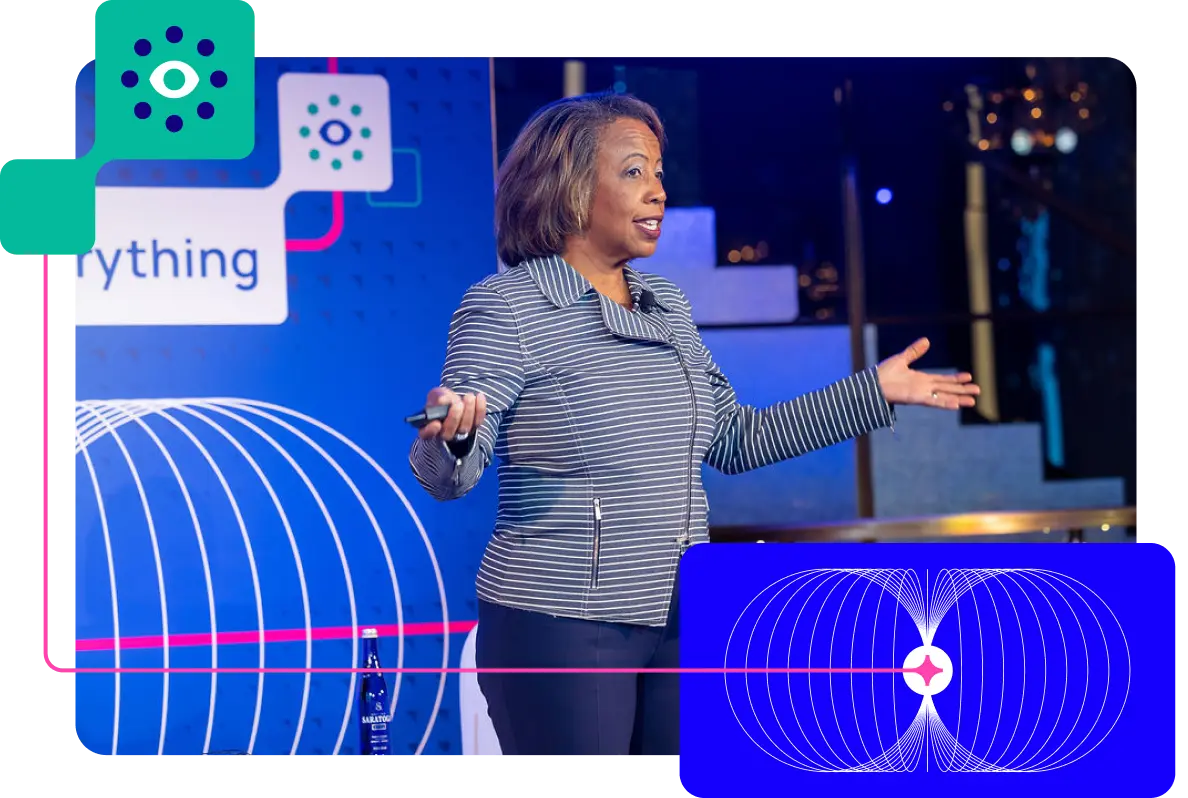
Four enterprise AI trends from CEO Kim Crawford Goodman
Context turns data into understanding
Communications data adds meaning to transactions, decisions, and customer interactions. Connecting it with structured data and trusted external sources helps organizations uncover insights that individual records can’t provide.
The right models help manage AI costs
With inference costs rising, Goodman emphasized matching models to the tasks they perform. Testing and optimizing model choices, including smaller, specialized models, can deliver results more efficiently.
AI agents expand what teams can do
Organizations are adopting agents from technology partners and building their own. Goodman outlined Smarsh’s vision for a flexible intelligence platform that combines native Smarsh capabilities with customers’ own models and agents.
Governance and security build trust
Realizing AI’s benefits requires strong governance and security. Goodman highlighted the essential role of risk, compliance, and technology teams in protecting information, maintaining controls, and enabling responsible AI adoption.
The Future of AI for the Enterprise
Moving AI from experimentation into everyday business requires more than technology. In the fireside chat The Future of AI for the Enterprise, Alla Whitston, chief information officer for the Americas at MUFG Bank, Ltd., and Arym Diamond, head of data and AI sales at AWS, joined Smarsh Chief Growth Officer Alessandro Silva to discuss how enterprises can scale AI while protecting client trust.
Business needs drive AI adoption
Whitston explained how MUFG moved beyond proofs of concept by having business teams identify opportunities and rethink how work gets done. An AI-ready data foundation, trusted external sources, and built-in compliance controls helped turn experimentation into business impact.
Context and authority let agents act
AI agents can do more than retrieve information. They can help move work forward. Diamond highlighted the opportunity to connect data and context to business decisions. Whitston emphasized defining each agent’s identity, access rights, and level of autonomy according to the risks of its workflow.
Oversight extends across every step
As agents take on more complex tasks, Whitston stressed evaluating and validating decisions throughout an agent’s workflow, not only final outputs. Diamond explored AI’s potential to anticipate customer and employee needs. Both speakers emphasized balancing greater autonomy with human judgment, appropriate controls, and the trust that underpins lasting client relationships.
Turn AI insights in action
You can turn communications data into actionable intelligence, detect risk earlier, and strengthen oversight with the Smarsh Platform.